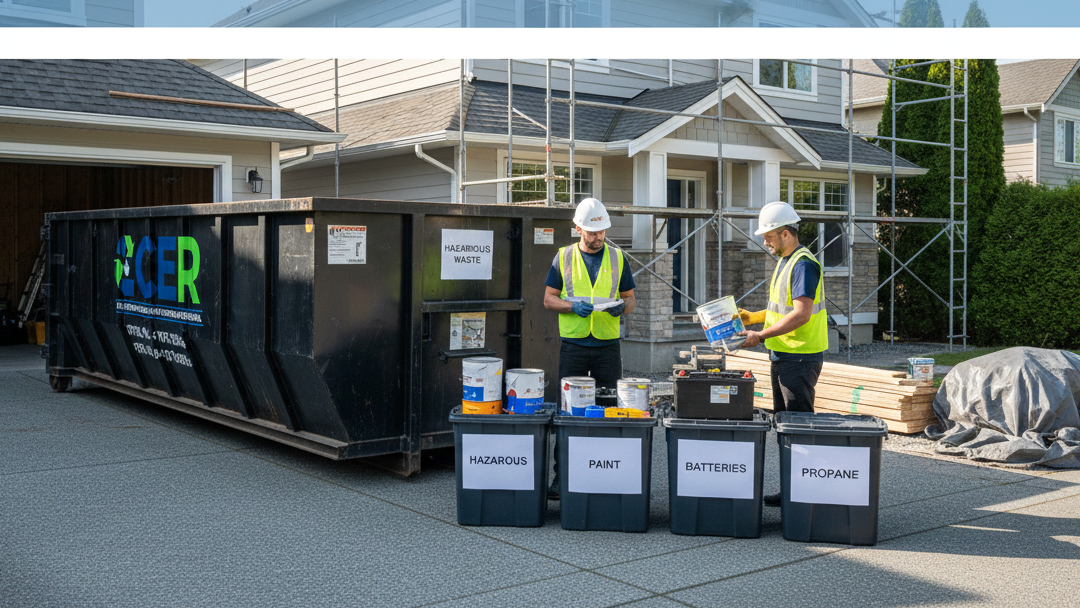
Renting a dumpster is one of the easiest ways to manage waste during renovations, cleanouts, construction projects, or large property clearances. However, not everything can go into a dumpster. Many hazardous materials are strictly prohibited due to environmental regulations, safety risks, and disposal laws in British Columbia.
Before your dumpster arrives, it’s essential to identify and separate hazardous items to avoid fines, rejected pickups, or environmental harm. In this guide, we’ll explain which materials must be removed beforehand and why proper disposal matters.
Why Hazardous Materials Can’t Go in Dumpsters
Hazardous waste poses risks to human health, sanitation workers, and the environment. When these materials are placed in regular dumpsters, they can:
- Leak toxic chemicals into soil and groundwater
- Cause fires or explosions
- Release harmful fumes
- Contaminate recyclable materials
- Result in regulatory penalties
Dumpster rental companies follow strict guidelines about what can and cannot be accepted. Failing to comply can lead to additional charges or service refusal.
If you’re arranging Dumpster Rental Services Surrey, it’s important to review prohibited items before loading the bin.
1. Paint and Solvents
Paint products, especially oil-based paints, are among the most common hazardous items found in renovation projects. Liquid paint, paint thinners, stains, varnishes, and solvents contain chemicals that should never be thrown into a dumpster.
Improper disposal can contaminate landfills and create toxic runoff. Instead, leftover paint should be taken to authorized recycling depots. Many communities offer Paint Recycling Surrey programs that safely process unused paint and related materials.
Latex paint may sometimes be disposed of if fully dried, but regulations vary. Always confirm with your waste provider before disposal.
2. Chemicals and Cleaning Products
Industrial cleaners, pesticides, herbicides, pool chemicals, and automotive fluids are classified as hazardous waste. Even small amounts can pose serious environmental risks.
Common prohibited items include:
- Bleach and ammonia (in large quantities)
- Drain cleaners
- Fertilizers
- Gasoline and diesel
- Motor oil and antifreeze
These substances require specialized handling under Hazardous Waste Disposal Surrey guidelines to ensure they are treated and processed safely.
3. Batteries
Batteries contain corrosive acids and heavy metals that can leak into the environment. Lithium-ion batteries, in particular, pose fire risks if damaged or compacted in waste trucks.
Do not place the following in dumpsters:
- Car batteries
- Rechargeable batteries
- Lithium batteries
- Industrial battery packs
Most municipalities provide battery recycling programs or designated drop-off depots.
4. Electronics (E-Waste)
Electronic devices contain hazardous components such as lead, mercury, and cadmium. Items like computers, televisions, printers, and monitors should never go into a dumpster.
Instead, they should be delivered to certified e-waste recycling facilities. Recycling electronics prevents toxic materials from entering landfills and allows valuable metals to be recovered.
5. Appliances Containing Refrigerants
Appliances such as refrigerators, freezers, air conditioners, and dehumidifiers contain refrigerants that must be professionally removed before disposal. These chemicals can harm the ozone layer and are regulated under environmental laws.
If you’re cleaning out a home or commercial space before a dumpster delivery, arrange for certified technicians to remove refrigerants before disposal.
6. Asbestos-Containing Materials
Asbestos is a highly regulated hazardous material often found in older homes and buildings. It may be present in insulation, ceiling tiles, floor tiles, and certain roofing materials.
Asbestos cannot be placed in regular dumpsters. It requires specialized removal, containment, and transportation procedures to prevent airborne contamination.
If you suspect asbestos during renovation, consult a licensed abatement professional before proceeding.
7. Medical and Biohazard Waste
Sharps, needles, pharmaceuticals, and biohazard materials are strictly prohibited from dumpsters. These materials pose serious health risks and must be handled by certified medical waste disposal providers.
8. Tires
Tires are typically banned from dumpsters because they can trap methane gas in landfills and create fire hazards. Many recycling facilities accept used tires separately for proper processing.
9. Propane Tanks and Pressurized Containers
Pressurized tanks and aerosol cans can explode if compacted in waste trucks. Propane cylinders, helium tanks, and fire extinguishers should be returned to suppliers or disposed of through designated facilities.
10. Fuel and Oil
Gasoline, diesel, and other fuels are flammable and environmentally hazardous. These materials require controlled storage and professional disposal. Never pour fuel into a dumpster or down drains.
How to Prepare Before Your Dumpster Arrives
To avoid complications, take these steps before delivery:
- Walk through your property and identify hazardous materials.
- Separate prohibited items from general debris.
- Research local recycling or hazardous waste depots.
- Ask your dumpster provider for a prohibited items list.
- Schedule specialized pickups for regulated waste if needed.
Planning ahead prevents delays and ensures your project runs smoothly.
Consequences of Ignoring Restrictions
Placing hazardous materials in a dumpster can lead to:
- Additional disposal fees
- Fines from environmental authorities
- Refusal of waste pickup
- Project delays
- Legal liability
Responsible waste management protects your property, workers, and community.
The Importance of Professional Waste Guidance
For larger renovation or construction projects, businesses and homeowners often generate mixed waste. Consulting professionals ensures proper sorting and disposal of restricted items.
Working with experienced providers familiar with hazardous material regulations reduces the risk of non-compliance. Whether you are handling a residential renovation or commercial cleanup, proper guidance is invaluable.
Companies offering Hazardous Waste Disposal Surrey services can assist in managing regulated materials separately from general dumpster waste.
Dumpsters are incredibly useful for managing large volumes of debris—but they are not designed for hazardous materials. Paint, chemicals, batteries, electronics, refrigerants, fuels, asbestos, and medical waste must be handled separately to protect public health and the environment.
By identifying and removing hazardous items before your dumpster arrives, you avoid costly penalties and ensure smooth project completion. If you’re planning a renovation or major cleanup in Surrey, professional support makes waste management simple and compliant.
For reliable dumpster rentals and responsible handling of hazardous materials, Canadian Empire Recycling provides expert guidance and waste management solutions. Whether you need help with regulated materials, recycling services, or general waste disposal, their experienced team ensures safe and compliant service from start to finish.
Contact Canadian Empire Recycling to schedule your dumpster rental and ensure hazardous items are handled the right way.
Frequently Asked Questions
What happens if I accidentally place hazardous materials in my dumpster?
If hazardous items are found, the dumpster provider may refuse pickup, charge additional fees, or require you to remove the materials before collection. It’s best to confirm prohibited items in advance.
Are batteries allowed in Dumpster Rental Services Surrey bins?
No, car batteries, lithium batteries, and rechargeable batteries are prohibited because they contain hazardous chemicals and pose fire risks. They must be recycled through authorized facilities.
How do I dispose of chemicals and fuel in Surrey?
Chemicals, gasoline, diesel, and other flammable liquids require professional handling under Hazardous Waste Disposal Surrey regulations. These materials should never be placed in a dumpster.
Can appliances go in a dumpster rental?
Some appliances may be accepted, but items containing refrigerants (like fridges or air conditioners) must have the refrigerant professionally removed before disposal. Always check with your provider first.