
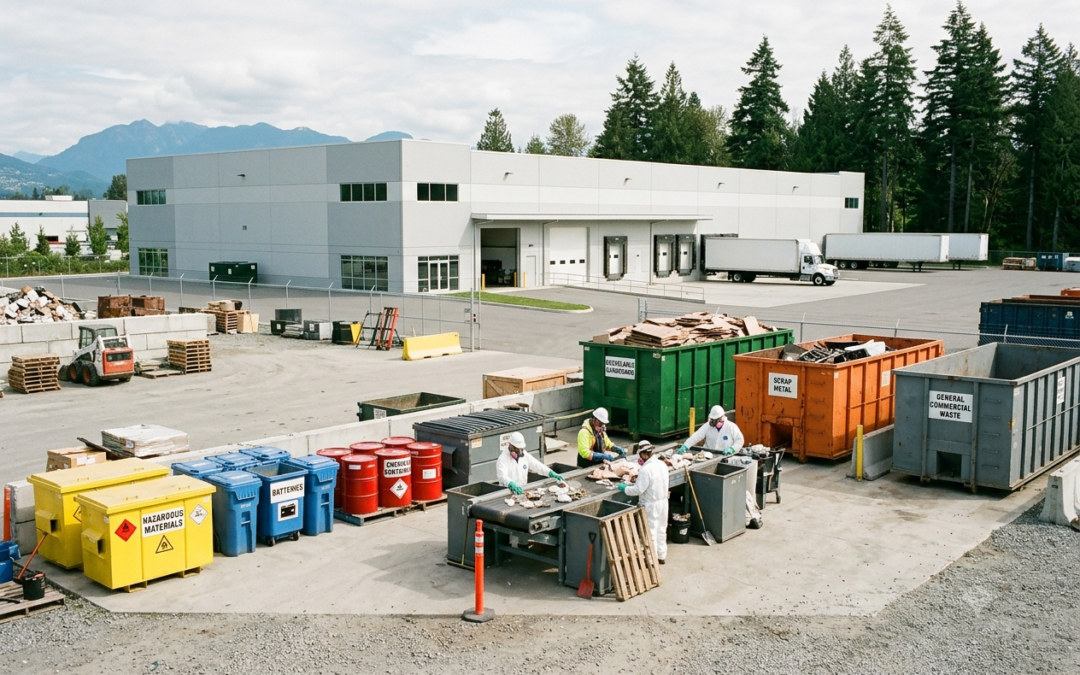
Commercial businesses in Delta can generate many different types of waste during everyday operations, renovations, relocations, property cleanouts, and construction projects. While cardboard, packaging, scrap metal, and some general debris can often enter standard recycling or disposal streams, other materials require more careful handling.
The important question is not simply how much waste a business produces, but what the waste contains and whether it presents specific handling, transportation, or disposal requirements.
For Delta businesses, identifying these materials early can help prevent improper disposal, reduce unnecessary delays, and keep different waste streams properly separated.
What Makes Commercial Waste Require Special Handling?
Commercial waste may need specialized management when it contains substances or materials that cannot safely or appropriately be placed with ordinary garbage.
Depending on the material, this can include products that are flammable, corrosive, reactive, toxic, contaminated, or otherwise subject to specific disposal requirements.
Common examples may include:
- Chemical products
- Solvents and degreasers
- Certain paints and coatings
- Used oils and petroleum-based products
- Batteries
- Pesticides
- Chemical cleaning products
- Contaminated absorbents
- Certain fluorescent lamps
- Asbestos-containing materials
- Containers with hazardous residues
Not every product automatically falls into the same waste category. Its contents, condition, quantity, and applicable disposal requirements can determine how it should be managed.
1. Commercial Chemicals and Solvents
Businesses such as workshops, industrial facilities, maintenance operations, and certain retail or service businesses may accumulate chemical products over time.
Cleaning chemicals, solvents, degreasers, adhesives, coatings, and similar products should not automatically be treated as general commercial garbage when they are no longer needed.
Older containers can also create additional concerns if labels are damaged, containers are deteriorating, or the contents are unknown.
Businesses should identify chemical products before a major cleanout and keep them separate from ordinary waste until the appropriate disposal method has been confirmed.
2. Used Oils and Petroleum-Based Materials
Used oils and petroleum-related products can appear in automotive, mechanical, industrial, and maintenance operations.
A commercial property cleanout may uncover containers of used oil, oily materials, filters, or absorbents contaminated with petroleum products.
These materials should be kept separate from ordinary commercial waste rather than simply placing them into a general waste container.
Proper identification and segregation can make the disposal process more organized while reducing the possibility of contamination.
3. Batteries and Other Potentially Hazardous Components
Commercial businesses can accumulate different types of batteries through equipment, vehicles, emergency systems, tools, electronics, and other operations.
Damaged, leaking, or improperly stored batteries can create additional handling concerns.
Instead of mixing batteries into general waste, businesses should identify them as a separate waste stream and determine the appropriate recycling or disposal route.
This becomes especially important during large commercial cleanouts when batteries may be discovered in storage rooms, workshops, offices, and maintenance areas.
4. Paints, Coatings, and Related Products
Commercial renovation and maintenance projects can leave behind partially used paint, coatings, stains, thinners, and related products.
A property owner may discover these materials years after they were originally purchased.
Rather than assuming that every container can go into regular garbage, businesses should review the product information and determine whether specialized handling is required.
Keeping these products separate during a renovation or cleanout also makes it easier to identify materials that require a dedicated disposal solution.
5. Contaminated Materials
Waste can become more complicated when ordinary materials have been contaminated by chemicals, oils, or other hazardous substances.
Examples may include absorbent pads, rags, filters, protective materials, containers, or other debris that have come into contact with hazardous substances.
The original material may have been ordinary, but contamination can change how it needs to be managed.
For this reason, businesses should not assume that contaminated materials can automatically follow the same disposal route as clean materials.
6. Asbestos-Containing Materials
Older commercial buildings can contain asbestos in certain construction materials.
Asbestos-related waste can become an issue during demolition, renovation, remodeling, or structural repairs when materials are disturbed.
Suspected asbestos-containing materials should not be treated as ordinary construction debris. Appropriate assessment, removal, containment, transportation, and disposal procedures may apply.
Businesses planning renovation or demolition in Delta should therefore consider asbestos identification before work begins, particularly when working with older structures.
7. Electronic and Electrical Waste
Commercial properties can accumulate computers, monitors, equipment, electrical components, and other electronic materials during office closures or technology upgrades.
Some electronic products can be recovered or recycled through dedicated programs rather than being placed in general waste.
Separating electronics from ordinary commercial garbage can help businesses direct materials toward appropriate recycling or recovery options.
It also prevents potentially unsuitable components from becoming mixed with unrelated waste streams.
Why Waste Separation Matters for Delta Businesses
One of the biggest challenges during commercial cleanouts is having several different types of waste in the same location.
A warehouse, office, retail property, or industrial site could contain recyclable cardboard, scrap metal, wood, general debris, electronics, chemicals, batteries, and contaminated materials at the same time.
Treating all of these materials as one waste stream can make disposal less efficient and may create problems when materials require different handling procedures.
A better approach is to identify waste categories before collection.
Businesses can begin by separating:
- General commercial waste
- Recyclable materials
- Scrap metal
- Electronic waste
- Chemical products
- Batteries
- Contaminated materials
- Construction and demolition debris
- Asbestos-containing materials, where applicable
This makes it easier to determine which materials can be recycled and which require specialized disposal.
When Should Delta Businesses Arrange Hazardous Waste Disposal?
Businesses should consider waste requirements before starting a major cleanout, renovation, relocation, or demolition project.
Waiting until the day of collection can create unnecessary complications, especially when workers discover unknown containers or materials that were not included in the original waste plan.
Planning allows businesses to:
- Inspect storage areas and workspaces.
- Identify potentially hazardous products.
- Check available labels and product information.
- Separate specialized materials from general waste.
- Identify recyclable materials.
- Confirm appropriate collection and disposal arrangements.
- Communicate the expected waste types to the waste-management provider.
This approach is particularly useful for businesses dealing with large volumes of accumulated waste.
What About Hazardous Waste Drop-Off in Delta?
Some businesses may search specifically for Hazardous Waste Drop Off Delta when they have a small quantity of unwanted hazardous material.
However, commercial waste requirements can differ from household waste disposal. Businesses should not assume that a residential drop-off location or standard recycling facility accepts every type or quantity of commercial hazardous waste disposal delta.
Before transporting waste, businesses should confirm that the receiving facility or service accepts the specific material, quantity, and commercial waste type involved.
For larger commercial projects, arranging an appropriate waste-management service can be more practical than attempting to transport multiple waste categories independently.
How Commercial Renovations Can Create Special Waste
Renovation projects often produce mixed waste streams.
A contractor may remove drywall, flooring, cabinetry, fixtures, metal, packaging, and other construction materials while also discovering old paints, adhesives, chemicals, insulation, or other materials requiring additional attention.
This is why waste planning should be part of the renovation process rather than something considered only after demolition begins.
Before work starts, contractors and property managers can identify potentially problematic materials and establish separate collection arrangements where necessary.
How to Reduce Problems During Commercial Waste Disposal
Delta businesses can make waste management more efficient by following a few practical principles:
Identify Waste Before Collection
Knowing what materials are present helps determine the appropriate disposal or recycling route.
Keep Different Waste Streams Separate
Do not mix hazardous materials with general commercial garbage or recyclable materials.
Do Not Mix Chemicals
Different chemical products should not be combined simply to reduce the number of containers.
Pay Attention to Unknown Containers
Unlabelled or damaged containers should be treated cautiously until their contents and appropriate management requirements are established.
Plan for Large Cleanouts
Commercial closures, relocations, renovations, and demolitions can generate significant waste. Early planning gives businesses more time to arrange the appropriate services.
What Delta Businesses Should Consider Before Choosing a Disposal Service
Before arranging commercial waste collection, businesses should consider the type of material, approximate quantity, condition of the waste, and whether different waste streams need to be separated.
For specialized materials, it is also important to communicate accurate information about what is being collected. This allows the waste-management provider to determine whether the material requires specific handling or disposal arrangements.
Businesses should also avoid assuming that a service accepting general commercial waste automatically accepts every hazardous or specialized material.
Clear communication before collection can help reduce rejected loads, unexpected delays, and improper disposal.
Commercial waste in Delta can include everything from recyclable cardboard and scrap metal to chemicals, batteries, contaminated materials, asbestos-containing products, and other specialized waste. The correct disposal method depends on the material and its specific characteristics.
By identifying waste streams before a cleanout, renovation, relocation, or demolition, businesses can separate recyclable materials from general waste and keep potentially hazardous materials out of inappropriate disposal channels.
If your business needs help managing specialized or commercial waste, Canadian Empire Recycling & Disposal can help you plan an appropriate waste-management solution. Contact Canadian Empire Recycling & Disposal to discuss hazardous waste disposal, commercial waste requirements, and disposal options for your business.