Quick answer: An old chemical product does not automatically become waste just because it has been sitting on a commercial property. But if the product is expired, damaged, unidentified, contaminated, no longer needed, or cannot be safely used as intended, it may need to be treated as waste rather than ordinary business inventory. Burnaby businesses should assess the material before moving, discarding, or mixing it with other waste.
A forgotten shelf of chemical products can be easy to overlook during normal business operations. The situation changes when a business renovates, relocates, closes a storage area, or starts clearing an older commercial property.
That is when the important question becomes: Is this still a usable product, or has it become waste?
When Does an Old Chemical Become Waste?
Age alone does not necessarily determine whether a chemical waste disposal Burnaby.
A business may still have a legitimate use for a product that has been stored properly and remains in suitable condition. However, several warning signs can change the situation.
A chemical may need to be considered for waste handling when:
- The product is past its intended shelf life.
- The business no longer has a use for it.
- The original label or product information is missing.
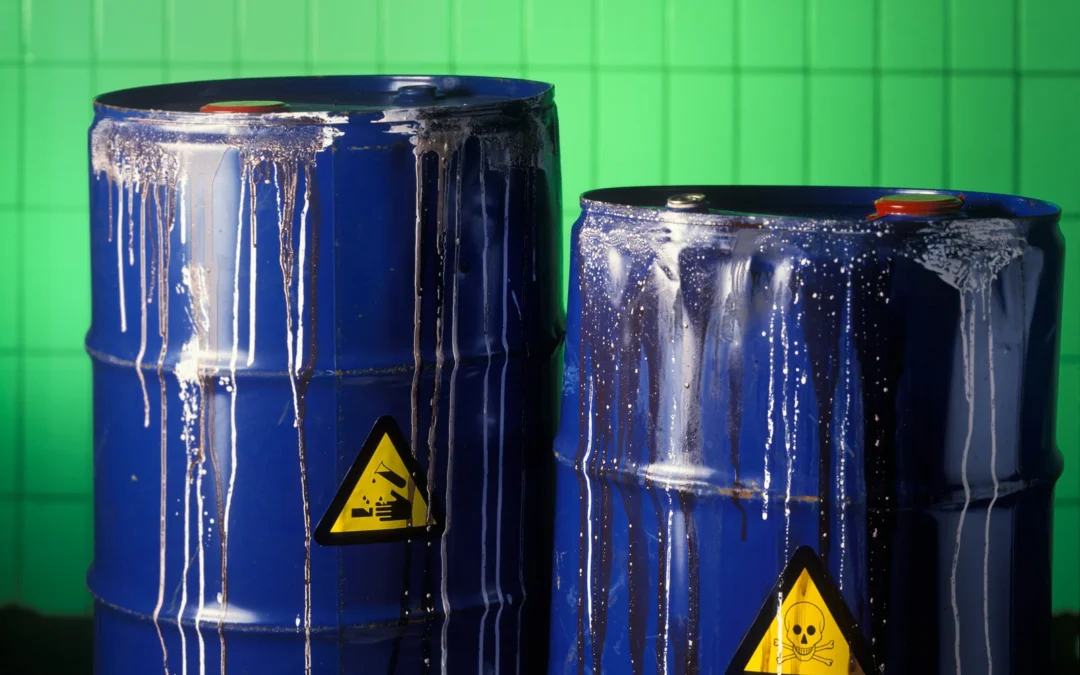
- The container is leaking, damaged, swollen, or badly deteriorated.
- The contents appear contaminated or different from their original condition.
- The product has been abandoned by a previous tenant or owner.
- The business cannot determine what the material is.
- The product cannot be safely used for its original purpose.
The key point is that “old” and “waste” are not necessarily the same thing. The condition, identity, intended use, and circumstances surrounding the material all matter.
Why This Matters During a Burnaby Commercial Cleanup
Chemical products can remain unnoticed for years because they are often stored in back rooms, maintenance areas, workshops, utility spaces, or locked cabinets.
During a commercial cleanup, however, those materials can suddenly become part of the waste stream.
For example, a Burnaby business may discover:
- Old cleaning chemicals
- Maintenance products
- Solvents
- Paint-related materials
- Batteries
- Chemical containers with damaged labels
- Unused products left by a former tenant
- Materials from an older business operation
These items should not automatically be placed with general commercial garbage simply because the business no longer needs them.
This is where Commercial Hazardous Waste Disposal becomes an important part of the cleanup plan.
What Should a Business Do When It Cannot Identify a Chemical?
One of the biggest mistakes is guessing.
If a container has no readable label, the business should not assume it is harmless simply because it looks ordinary. Similarly, an old bottle should not be opened just to determine what is inside.
Instead, businesses should look for information that can help identify the product, such as:
- Original labels
- Product names
- Manufacturer information
- Safety documentation
- Purchase records
- Previous inventory records
- Information from the previous tenant or department
If the material still cannot be identified, it should be treated cautiously and kept separate from ordinary waste until the appropriate handling requirements are established.
Don’t Mix Unknown Chemicals With Other Waste
Commercial cleanups often involve multiple waste streams at the same time.
Cardboard may be recyclable. Furniture may be reusable or recyclable. Construction debris may have its own disposal route. Chemical products can require completely different handling.
That is why businesses should avoid combining unknown or potentially hazardous materials with regular waste.
Mixing materials can make identification and handling more difficult. It can also create unnecessary risks for employees, contractors, waste handlers, and transportation personnel.
A better approach is to identify first, separate second, and arrange the appropriate waste service before disposal.
What If the Chemical Is Still Usable?
If a chemical is properly identified, stored correctly, in suitable condition, and still has a legitimate business use, it may remain a product rather than waste.
Businesses should not automatically discard every older chemical they find.
However, if the business has no reasonable use for the product, the question changes. Keeping unwanted chemicals indefinitely can create a future cleanup problem, particularly when the business is preparing to move, renovate, close, or change operations.
A planned assessment can help separate usable inventory from materials that need proper disposal.
What About Chemicals Left by a Previous Tenant?
This situation is common during commercial property changes.
A new tenant may discover containers, maintenance products, or other materials that were left behind. The new business may have no idea what the products are, how old they are, or why they were stored there.
That does not make the materials ordinary garbage.
Before clearing the area, the business should determine what the materials are and whether they require special handling. If they are unwanted hazardous materials, arranging Hazardous Waste Disposal Burnaby can help ensure they are handled through the appropriate waste stream.
The Container Can Tell You Something, Too
The condition of the container is another reason not to treat old chemicals casually.
Look for visible signs such as:
- Leaks
- Corrosion
- Cracks
- Bulging
- Missing or damaged caps
- Faded or unreadable labels
- Residue around the container
A damaged container may require additional precautions before it can be moved.
If a container appears unstable or compromised, employees should not experiment with opening, transferring, diluting, or combining the contents.
Commercial Waste Disposal Is Not One-Size-Fits-All
A commercial property can generate many different types of waste, but they do not all follow the same disposal route.
A typical cleanup might include recyclable cardboard, general garbage, electronic equipment, furniture, construction materials, and potentially hazardous products.
The more accurately these streams are separated, the easier it becomes to determine what should happen to each one.
For Burnaby businesses, proper Commercial Waste Disposal Burnaby planning means looking at the entire waste stream—not simply arranging one container and putting everything into it.
A Better Way to Handle Old Chemicals
If your business discovers old chemicals, start with a simple process:
- Stop and identify the material.
Do not assume an unfamiliar product is safe. - Check the available product information.
Look for labels, records, or documentation. - Inspect the container without disturbing the contents.
Note visible damage, leaks, corrosion, or missing information. - Keep questionable materials separate.
Do not mix them with general commercial waste. - Determine whether the material is still a usable product or unwanted waste.
- Arrange the appropriate disposal service if it has become waste.
This approach can prevent an overlooked chemical shelf from becoming a larger problem during a commercial move or cleanup.
The Real Question Isn’t Just “How Old Is It?”
When a Burnaby business discovers an old chemical, age is only one part of the answer.
The more useful questions are:
What is it? Is the container intact? Is it still usable? Does the business still need it? Can its contents be identified? And if it is no longer a product, how should it enter the waste stream?
Answering those questions before disposal can make commercial cleanup safer and more organized.
If the material is no longer wanted and requires special handling, professional waste planning can help ensure it does not simply end up in the regular garbage stream.
Old chemicals sitting in a Burnaby business do not automatically become waste overnight—but they also should not automatically be treated as ordinary garbage. Identification, condition, intended use, and proper separation all matter.
When unwanted chemicals or other potentially hazardous materials are discovered, businesses should plan their disposal before the cleanup reaches its final stage.
Canadian Empire Recycling & Disposal helps Burnaby businesses manage hazardous and commercial waste through appropriate disposal solutions. Contact Canadian Empire Recycling & Disposal team to discuss your materials and arrange the right waste service for your project.