
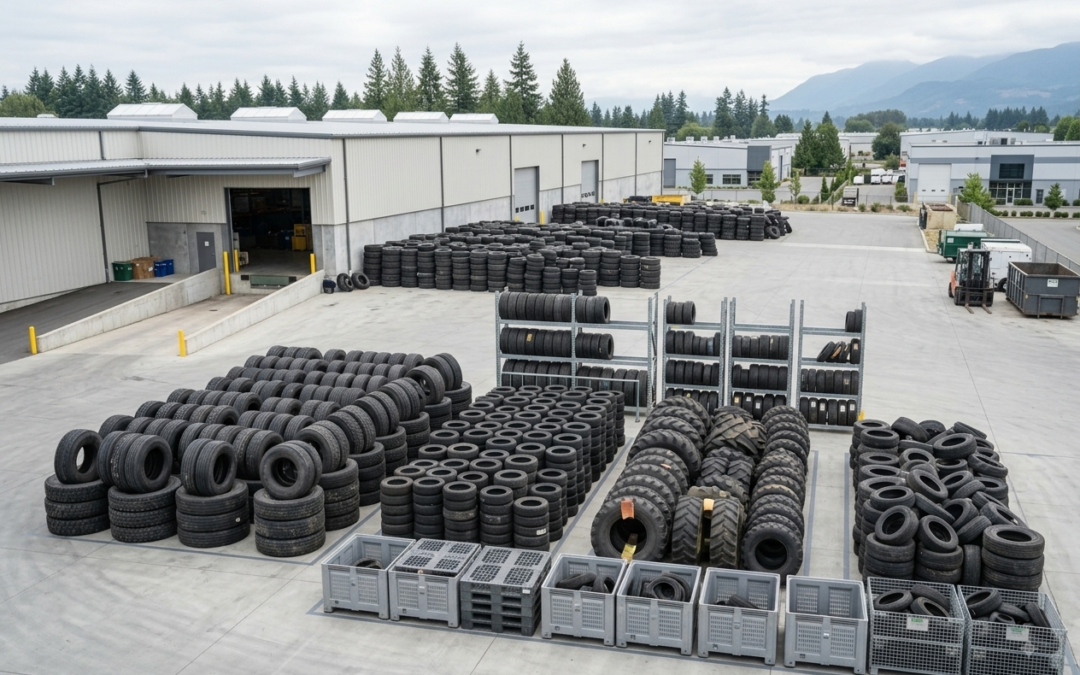
For businesses in Abbotsford, used tires can accumulate much faster than expected. Auto repair shops, tire retailers, transportation companies, agricultural operations, construction businesses, fleet operators, and equipment companies may generate dozens or even hundreds of unwanted tires as part of normal operations.
The problem becomes more noticeable when tires are stored for months because a business is unsure what to do with them.
Old tires take up considerable space, are difficult to stack efficiently, and can become a long-term storage issue when volumes continue to grow. Simply moving them into another corner of a warehouse or yard does not solve the underlying waste-management problem.
For businesses dealing with large quantities, Tires Recycling provides a more organized way to manage end-of-life tires and keep them out of unsuitable waste streams.
Why Do Businesses Accumulate So Many Used Tires?
Commercial tire waste can come from several different sources.
An automotive service facility may remove tires during seasonal changes, repairs, replacements, or vehicle servicing. A transportation company may replace tires across an entire fleet. Agricultural businesses may eventually accumulate tires from tractors, trailers, loaders, and other equipment.
Construction and industrial companies can also generate tire waste from heavy equipment and fleet maintenance.
Common reasons businesses end up with large tire inventories include:
- Fleet tire replacement
- Seasonal tire changes
- Damaged tires
- Worn-out tires
- Defective or rejected tires
- Equipment replacement
- Business relocation
- Warehouse cleanouts
- Automotive service operations
- Agricultural equipment maintenance
When only a few tires are involved, storage may seem manageable. Once the volume reaches hundreds, however, businesses need a more deliberate removal and recycling strategy.
What Should a Business Do With Hundreds of Used Tires?
The first step is to determine how many tires need to be removed and where they are currently stored.
Businesses should avoid simply adding new tires to an existing pile without tracking the growing volume. A basic inventory can help determine the scale of the cleanup and make collection planning easier.
Consider recording:
- Approximate number of tires
- Tire sizes
- Whether tires are from passenger vehicles, trucks, trailers, or equipment
- Condition of the tires
- Current storage location
- Whether tires are mixed with rims or other materials
- Whether additional tires are expected soon
This information can help a commercial recycling provider understand the requirements before pickup.
Can All Used Tires Be Recycled?
Used does not necessarily mean unusable.
Some tires may still have potential for reuse depending on their condition, specifications, and applicable requirements. Others may have reached the end of their useful life and need to enter an appropriate recycling or recovery stream.
Businesses should not assume that visibly worn or damaged tires can simply be placed with general commercial waste.
Tires are made from a combination of materials, including rubber, steel, and other components. Their size and construction also make them different from ordinary waste materials.
That is why separating tires from general garbage is an important first step.
Why Tires Should Not Be Treated Like Ordinary Commercial Garbage
A large quantity of tires can create a very different waste-management challenge from ordinary commercial refuse.
Their shape makes them difficult to compact efficiently, and large piles can consume valuable warehouse or yard space.
Tires also retain their shape even when other waste materials are compressed around them.
For businesses, this means placing tires into a general waste stream may not be the most efficient solution.
Instead, tires should be identified as a separate material stream and directed toward an appropriate recycling or recovery process.
What Happens During Commercial Tire Recycling?
The exact downstream process depends on the tire and the recycling facility, but tire recycling generally focuses on recovering useful materials rather than treating the entire tire as ordinary garbage.
Depending on the process, tires may be mechanically processed to separate or recover materials such as:
- Rubber
- Steel
- Fibre and other components
Recovered rubber can be processed into different forms and used in various applications, while recovered steel can enter appropriate metal recycling streams.
The important point for businesses is that the tire does not necessarily have to become landfill waste simply because it is no longer suitable for its original purpose.
Why Proper Tire Storage Matters Before Pickup
Businesses should also think about how tires are stored while waiting for removal.
A growing tire stockpile can quickly become difficult to manage, particularly when tires are stored outdoors or in areas that were not designed for long-term waste storage.
A designated storage area can help keep tires organized and make eventual collection more efficient.
Businesses should also avoid allowing tires to obstruct:
- Emergency access
- Loading areas
- Walkways
- Equipment routes
- Fire safety access
- Regular business operations
The goal is to treat accumulating tire waste as a planned material stream rather than allowing it to become an unmanaged pile.
When Tire Recycling Becomes Part of a Larger Commercial Cleanout
Sometimes tires are only one part of a much larger business cleanup.
For example, an automotive facility closing down may have tires alongside:
- Scrap metal
- Automotive parts
- Cardboard
- Plastic packaging
- Batteries
- Used oils
- Chemical products
- General commercial waste
A warehouse relocation may involve similar material combinations.
In these situations, businesses should avoid combining everything into one waste stream.
Separating tires from other materials can make recycling more organized and may allow other recoverable materials to be managed through appropriate channels.
This broader approach to Commercial Waste Recycling Abbotsford can help businesses identify materials that should be recycled separately rather than sending everything to general disposal.
What About Tires With Rims?
Businesses may sometimes store tires still mounted on rims.
This can affect handling and processing requirements because the tire and metal rim represent different material streams.
If a business has a large quantity of tires with rims, it is useful to mention this when arranging collection.
The recycling process may require separation or additional handling depending on the materials and service requirements.
Rather than dismantling large quantities of tires without appropriate equipment, businesses should ask the recycling provider how mounted tires should be prepared.
What If the Tires Are Damaged or Contaminated?
Not every tire will be in the same condition.
Businesses may have tires that are:
- Heavily damaged
- Cut or punctured
- Covered in oil or other substances
- Mixed with other waste
- Extremely old
- Stored improperly
The condition of the material should be communicated before collection.
This is particularly important if tires are contaminated with chemicals or other hazardous substances.
A tire itself is not automatically classified as hazardous waste simply because it is old or damaged. However, contamination or associated materials can change how the waste should be handled.
If the cleanup also includes chemicals, oils, batteries, solvents, or other regulated materials, those items should be separated rather than placed into the tire recycling stream.
Businesses dealing with those materials may need specialized Hazardous Waste Disposal Abbotsford in addition to their tire recycling arrangements.
How Can Businesses Reduce Tire Waste Accumulation?
The best time to plan tire recycling is before the storage problem becomes overwhelming.
Businesses can establish an ongoing collection schedule rather than allowing tires to accumulate indefinitely.
For example, a fleet operator can monitor tire replacement volumes and arrange periodic removal. An automotive shop can designate a specific storage area and establish a routine for moving used tires into an appropriate recycling stream.
This approach can provide several practical benefits:
- Less storage pressure
- Better organization
- Easier inventory management
- Reduced clutter
- More predictable waste collection
- Better separation of recyclable materials
The exact schedule will depend on the business’s tire volume and operational needs.
Which Abbotsford Businesses Can Benefit From Commercial Tire Recycling?
Large-volume tire management can be relevant to many types of businesses, including:
Auto Repair Shops
Repair facilities can accumulate used tires from customer vehicles and replacement work.
Tire Retailers
Seasonal tire changes can create significant volumes, particularly during peak periods.
Fleet Operators
Delivery fleets, transportation companies, and service fleets may generate tires continuously throughout the year.
Agricultural Businesses
Farms and agricultural operations can accumulate tires from tractors, trailers, and other equipment.
Construction Companies
Heavy equipment and commercial vehicles can generate large tire waste streams during maintenance and replacement.
Equipment and Industrial Businesses
Companies operating forklifts, loaders, trailers, and specialized equipment may also need regular tire removal.
When Should an Abbotsford Business Arrange Tire Pickup?
There is no advantage to waiting until a storage area is full.
Businesses should consider arranging removal when tires begin taking up operational space, interfering with access, or accumulating faster than they can be managed internally.
A proactive approach is particularly useful for companies with predictable tire replacement cycles.
Instead of treating tire removal as an occasional emergency cleanup, businesses can incorporate recycling into their regular waste-management plan.
The Bottom Line for Abbotsford Businesses
Hundreds of used tires can become a significant commercial waste-management challenge if they are allowed to accumulate without a plan.
The solution starts with identifying the volume, keeping tires separated from unrelated waste, maintaining an organized storage area, and arranging an appropriate recycling or recovery service.
Businesses should also remember that tire waste may be only one part of a larger commercial cleanup. Separating tires from cardboard, metals, chemicals, batteries, and general waste can make the entire process more efficient and improve opportunities for material recovery.
For businesses that need reliable Tires Recycling Abbotsford, planning can make large-volume tire removal far easier to manage. When your facility also has other recyclable or specialized waste streams, a coordinated approach can help keep materials organized from collection through final processing.
How Canadian Empire Recycling & Disposal Can Help
Managing hundreds of used tires does not have to become a storage or cleanup headache for your Abbotsford business. Canadian Empire Recycling & Disposal can help businesses organize their tire recycling and broader commercial waste requirements, making it easier to keep used tires separated from other waste streams and move them toward appropriate recycling solutions.
If your business has accumulated a large volume of used tires, is planning a warehouse cleanout, replacing a commercial fleet, or dealing with ongoing tire waste, contact Canadian Empire Recycling & Disposal to discuss your Abbotsford recycling requirements and arrange a practical solution.
Frequently Asked Questions
Can hundreds of used tires be recycled?
Yes, many end-of-life tires can enter appropriate recycling or recovery streams. Depending on the processing method, materials such as rubber and steel may be recovered from used tires.
Can tires with rims be recycled?
Tires mounted on rims may require additional handling because the tire and rim are different material streams. Businesses should disclose whether tires are mounted when arranging a large-volume collection.
Are old or damaged tires considered hazardous waste?
Old or damaged tires are not automatically hazardous waste. However, tires contaminated with chemicals, oils, or other hazardous substances may require additional assessment and specialized handling.
Can businesses recycle tires along with other commercial waste?
Tires should generally be kept separate from unrelated commercial waste. Separating tires, recyclable materials, general waste, and potentially hazardous materials makes the overall waste-management process more organized and supports appropriate recycling.