Not all glass leaving a Surrey renovation, retail fit-out, or lab cleanout is safe to toss in the recycling bin — chemical residue, mercury-containing tubes, and asbestos-contaminated panels can push ordinary glass into regulated territory. This guide breaks down exactly which glass waste can go through standard recycling and which needs professional hazardous waste disposal in Surrey, so facility managers and contractors can classify it correctly the first time.
Getting this classification wrong has real consequences: mixed loads can be rejected at the transfer station, and contaminated glass sent through regular recycling creates worker safety and compliance risks under British Columbia’s environmental regulations.
Understanding Glass as a Waste Material
Glass itself is generally made from sand, soda ash, and limestone. In its basic form, such as bottles and jars, it is not classified as hazardous waste. However, certain types of glass or contaminated glass materials can become hazardous depending on their composition or usage.
For example:
- Broken window glass
- Tempered or laminated glass
- Automotive glass
- Laboratory glassware
- Glass contaminated with chemicals
- Fluorescent light tubes
Each category may require a different disposal method.
When Is Glass Not Hazardous?
Standard household glass, such as:
- Beverage bottles
- Food jars
- Non-treated window panes
is typically recyclable and not considered hazardous. These materials can be processed safely through Glass Recycling Surrey programs, which help reduce landfill waste and recover reusable materials.
Recycling clean glass conserves raw materials and reduces energy consumption during manufacturing. For residents and businesses in Surrey, this is the most environmentally responsible choice.
When Can Glass Be Considered Hazardous?
Glass may be considered hazardous in the following situations:
1. Chemical Contamination
If glass containers held hazardous chemicals, solvents, oils, or medical waste, the residue can make the material dangerous.
2. Industrial or Laboratory Glass
Beakers, test tubes, or industrial glass equipment may contain toxic substances.
3. Fluorescent Tubes and Bulbs
These contain mercury, which is hazardous and must be handled carefully.
4. Safety Risks from Broken Glass
While not chemically hazardous, broken glass can pose serious physical hazards. Sharp edges can cause injuries if not properly contained and transported.
5. Asbestos-Contaminated Glass
In older buildings, glass components removed during demolition may be contaminated with asbestos materials, requiring special handling.
In such cases, the material may fall under Hazardous Waste Disposal regulations and require professional management.
Construction and Renovation Projects in Surrey
During home or commercial renovations, large quantities of glass waste may be generated. Examples include:
- Storefront glass panels
- Shower enclosures
- Glass partitions
- Skylights
- Office windows
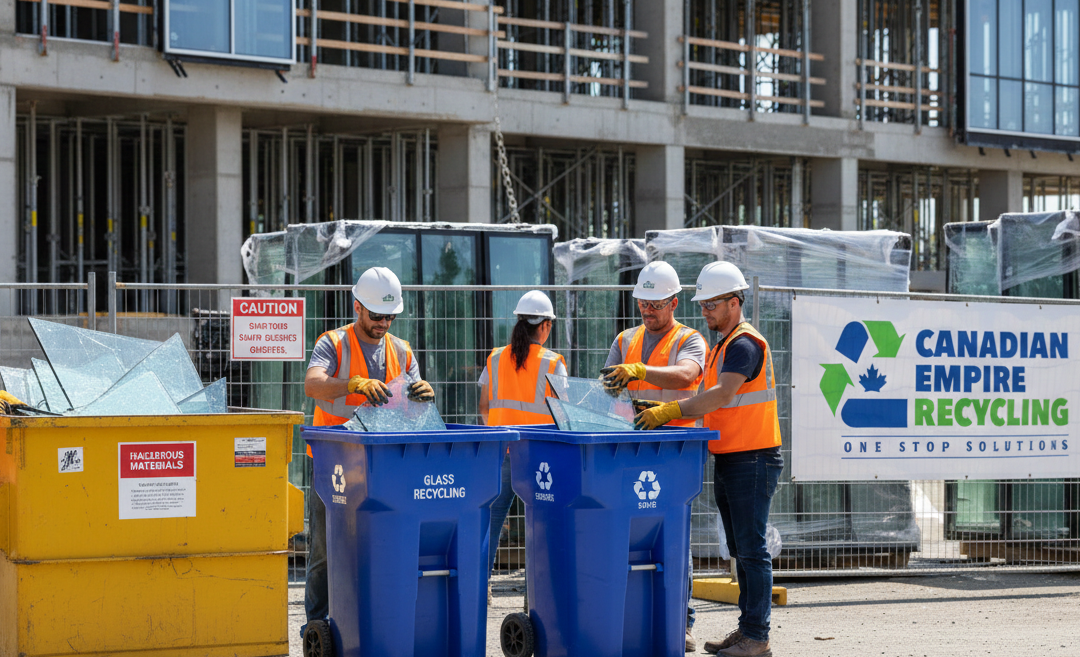
While clean glass from these projects is generally not hazardous, it must still be handled properly due to breakage risks.
Construction waste Surrey guidelines in Surrey emphasize:
- Safe packaging
- Secure transportation
- Proper sorting
- Separation from mixed debris
Mixing glass with other waste can make recycling more difficult and increase disposal costs.
Environmental Impact of Improper Glass Disposal
Although glass is non-toxic in many cases, improper disposal can still create problems:
- Glass does not biodegrade
- Landfills fill up faster
- Sharp fragments create hazards
- Recyclable materials are wasted
Recycling glass helps conserve natural resources and reduce environmental strain. Surrey encourages responsible waste management practices to support sustainability goals.
How to Dispose of Glass Safely in Surrey
Here are practical steps to follow:
Step 1: Identify the Type of Glass
Determine whether the glass is clean, contaminated, laminated, or industrial.
Step 2: Separate Glass from Other Waste
Keep it separate from wood, drywall, metal, and other debris.
Step 3: Package Broken Glass Securely
Use thick containers or wrap shards in heavy-duty material to prevent injuries.
Step 4: Contact a Professional Waste Disposal Service
For large volumes or potentially contaminated materials, professional services ensure compliance with local regulations.
Commercial Glass Disposal Considerations
Businesses in Surrey must be particularly careful with disposal practices. Improper handling can result in:
- Workplace injuries
- Environmental penalties
- Compliance violations
- Increased liability
Property managers, contractors, and commercial building owners should always verify whether the glass waste is contaminated or part of a regulated waste category.
Professional waste disposal providers ensure safe transport, proper documentation, and environmentally responsible processing.
Is All Glass Recyclable?
Not all glass can go into standard recycling streams. Items often excluded include:
- Mirrors
- Ceramics
- Heat-resistant glass (like Pyrex)
- Window glass with coatings
- Light bulbs
These materials have different melting points or chemical compositions that can disrupt recycling systems.
Always confirm disposal requirements before placing items in recycling bins.
The Importance of Professional Waste Management
Even when glass is not technically hazardous, it still requires responsible handling. Professional services help by:
- Sorting recyclable materials
- Identifying hazardous contamination
- Ensuring regulatory compliance
- Minimizing landfill waste
- Reducing workplace risks
This is especially important for construction sites, renovation projects, and industrial facilities in Surrey.
So, is glass considered hazardous waste in Surrey?
In most cases, non—standard glass is not hazardous. However, it can become hazardous if contaminated with chemicals, combined with asbestos materials, or if it contains substances like mercury.
The key is identifying the type of glass and choosing the correct disposal method. For safe, compliant, and environmentally responsible solutions, professional guidance is always recommended.
For assistance with commercial glass disposal, contaminated materials, or large-scale waste management, contact Canadian Empire Recycling. Their team provides reliable waste handling solutions in Surrey, ensuring materials are processed safely and in accordance with environmental standards.
Frequently Asked Questions
Can I put window glass in my regular recycling bin?
Most municipal recycling programs do not accept window glass. It often requires separate disposal.
Are fluorescent light tubes hazardous?
Yes, they contain mercury and must be disposed of through approved hazardous waste channels.
What should businesses do with large amounts of glass waste?
Businesses should contact professional waste disposal services to ensure safe and compliant handling.
How can I confirm if my glass waste is hazardous?
Check whether it is contaminated, industrial, or contains hazardous substances. When unsure, consult with Canadian Empire Recycling.