
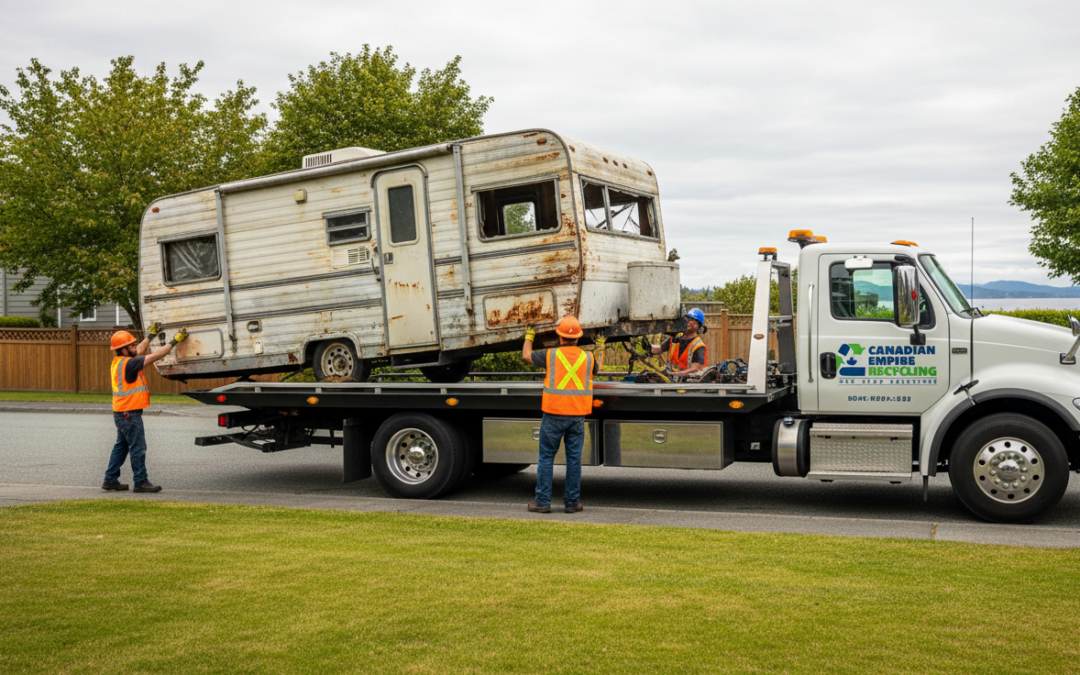
Discovering that your camper is severely damaged—or dealing with an abandoned camper sitting on your property—can quickly become stressful. Whether it’s been wrecked in an accident, deteriorated beyond repair, or left behind by a former tenant, figuring out what to do next isn’t always straightforward.
1. Assess the Condition of the Camper
The first step is determining whether the camper can be repaired, sold, scrapped, or needs full disposal.
Ask yourself:
- Is the structural frame intact?
- Are the electrical and plumbing systems functional?
- Is there water damage, mold, or rot?
- Has it been involved in a serious accident?
- Is it missing essential components like wheels or axles?
If repair costs exceed the camper’s value, disposal may be the most practical solution.
2. Check Ownership and Legal Status
If the camper is abandoned, ownership becomes a key concern. In Victoria, you cannot simply remove or scrap a vehicle that doesn’t legally belong to you.
Here’s what you should do:
- Verify ownership through registration documents.
- Contact ICBC (Insurance Corporation of British Columbia) for guidance.
- If abandoned on private property, document how long it has been there.
- Provide written notice to the owner if known.
- Check local bylaws regarding abandoned vehicles.
Municipal rules often require specific procedures before removing abandoned property. Skipping these steps could lead to legal issues.
3. Consider Selling for Parts or Scrap
Even heavily damaged campers often have salvageable components, including:
- Appliances (fridge, stove, microwave)
- Batteries
- Plumbing fixtures
- Windows and doors
- Metal framing
- Tires and rims
You may choose to:
- Sell usable parts individually
- List the camper as a “project vehicle.”
- Sell it to a scrap yard for metal value
However, this process can be time-consuming and may require dismantling the camper yourself.
4. Donate If It’s Still Usable
If the camper is structurally sound but no longer needed, donation could be an option. Some charities accept RVs and campers, though acceptance depends on condition.
Donation may provide:
- Tax benefits
- Faster removal
- Environmental benefits of extending the camper’s life
This option is generally not available for severely damaged or mold-infested campers.
5. Be Aware of Environmental Concerns
Damaged campers often contain materials that require careful handling, such as:
- Propane tanks
- Batteries
- Fuel or oil residue
- Mold-contaminated insulation
- Fiberglass panels
- Treated wood
Improper disposal can harm the environment and may violate local waste regulations. Dumping a camper illegally can lead to significant fines.
That’s why professional camper disposal services are often the safest solution.
6. Hire a Professional Camper Disposal Service
For severely damaged, non-operational, or abandoned campers, hiring professionals is usually the most efficient and stress-free option.
Professional disposal companies can:
- Two non-drivable campers
- Handle large-scale dismantling
- Remove hazardous materials safely
- Sort recyclable components
- Dispose of waste responsibly
They have the equipment and experience to manage bulky vehicles that regular junk removal services may not handle.
7. Handling Abandoned Campers on Private Property
If a camper has been left on your land by a former tenant or unknown party:
Step 1: Document Everything
Take photos and note how long it has been there.
Step 2: Contact Local Authorities
Victoria bylaws outline procedures for dealing with abandoned vehicles.
Step 3: Provide Notice
If the owner is known, written notice may be required before removal.
Step 4: Arrange Legal Removal
Work with a licensed disposal or towing provider to ensure compliance.
Following proper legal channels protects you from future disputes.
8. Costs of Camper Disposal
The cost of camper disposal in Victoria depends on:
- Size and weight
- Location and accessibility
- Condition (intact vs. dismantled)
- Towing requirements
- Hazardous material removal
While costs vary, hiring professionals can actually save money compared to fines, equipment rental, or personal labor involved in DIY removal.
9. Why Professional Disposal Is the Smart Choice
Here’s why many Victoria property owners and RV owners choose professional camper disposal:
Safety
Avoid injuries from dismantling heavy materials or handling mold and chemicals.
Convenience
No need to rent equipment or coordinate multiple service providers.
Compliance
Ensure disposal meets municipal and provincial regulations.
Environmental Responsibility
Professionals prioritize recycling metals and safe waste management.
10. Preventing Future Camper Abandonment Issues
To avoid similar problems in the future:
- Include clear lease terms regarding vehicle storage.
- Monitor vacant properties regularly.
- Install signage prohibiting unauthorized parking.
- Act quickly if a vehicle appears abandoned.
Proactive management reduces legal and financial risks.
Dealing with a damaged or abandoned camper doesn’t have to be overwhelming. Whether the camper is beyond repair, illegally abandoned, or simply no longer needed, you have several options—from selling parts and scrapping metal to hiring a professional removal team.
If you’re looking for reliable and responsible camper disposal services, Canadian Empire Recycling offers professional removal solutions tailored to property owners and RV owners. Their experienced team handles damaged and abandoned campers safely, efficiently, and in compliance with local regulations. Contact Canadian Empire Recycling to schedule your camper disposal and clear your property with confidence.