
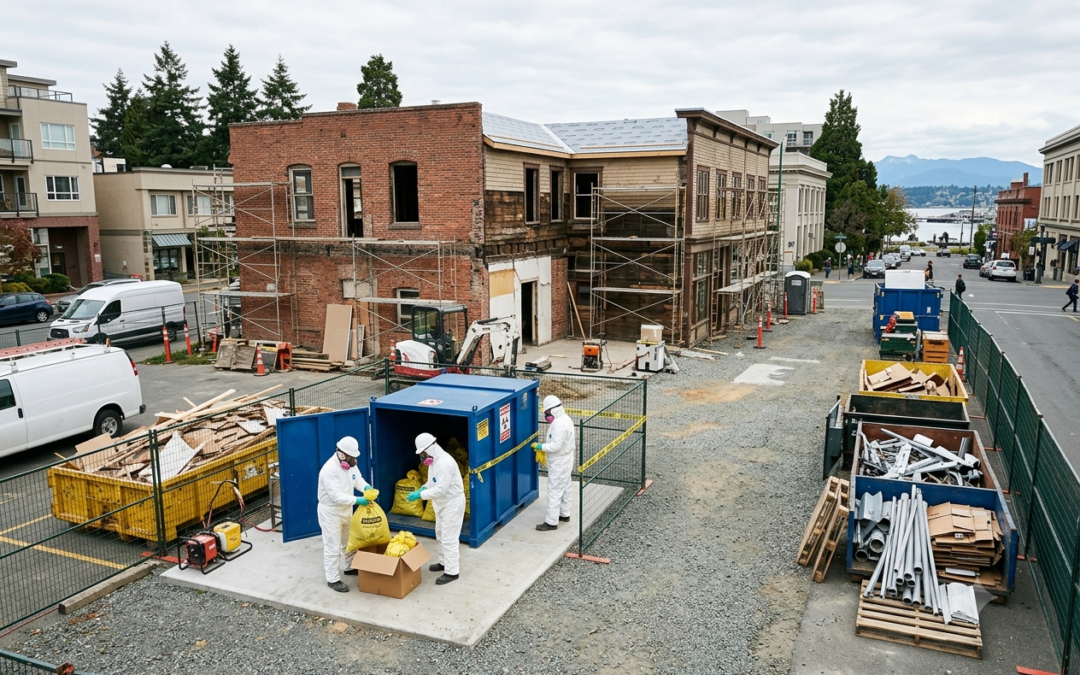
Renovating an older commercial property in Victoria can uncover materials that were installed long before the current business occupied the building. Flooring, insulation, ceiling products, pipe coverings, roofing materials, textured coatings, and other construction components may require further assessment when asbestos is suspected.
Finding suspected asbestos does not mean a renovation project has to be abandoned. However, it does mean the waste-management plan may need to change. Businesses should avoid treating suspected asbestos-containing materials as ordinary demolition debris and should arrange appropriate assessment, handling, containment, and disposal before continuing with affected work.
For Victoria businesses, understanding what to do when asbestos is discovered can help reduce unnecessary disruption and prevent specialized waste from being mixed with regular renovation debris.
Why Asbestos Can Be Found During Commercial Renovations
Asbestos was historically used in many building products because of its durability and resistance to heat and fire. As a result, older commercial properties can contain asbestos in areas that are not immediately visible.
Renovation activities that may uncover previously concealed materials include:
- Removing old flooring
- Opening walls or ceilings
- Replacing insulation
- Upgrading plumbing or electrical systems
- Removing older roofing materials
- Altering mechanical systems
- Demolishing interior partitions
- Removing old fixtures or finishes
A material’s age or appearance alone does not confirm whether it contains asbestos. When a suspect material is encountered, appropriate assessment should take place before it is disturbed further.
What Should Businesses Do First?
The first priority is to prevent unnecessary disturbance of the suspected material.
Workers should not continue cutting, drilling, breaking, sanding, or removing the material simply to determine what it is. The appropriate next step is to arrange professional assessment and follow the applicable requirements based on the project and material involved.
This is especially important when demolition has already started because disturbed material may create additional concerns for the worksite and surrounding waste.
Why Professional Assessment Matters
Not every older building product contains asbestos. Some materials may look similar to asbestos-containing products but may not actually contain asbestos.
Professional assessment can help establish whether specialized asbestos controls are required.
This distinction is important for businesses because unnecessarily disturbing a suspect material can create avoidable risks, while failing to recognize asbestos-containing material can result in improper handling and disposal.
For this reason, asbestos considerations should ideally be addressed before major renovation or demolition begins.
What Happens Once Asbestos Is Confirmed?
Once asbestos-containing material has been identified, the affected work should be managed according to the appropriate asbestos procedures.
The resulting waste should not simply be placed into a standard construction container.
Asbestos waste requires appropriate containment, preparation, transportation, and disposal through the applicable waste-management process.
This is where Asbestos Waste Disposal Victoria becomes an important part of the renovation plan.
Businesses should communicate accurate information about the material, expected quantity, condition, and project requirements when arranging waste services.
Why Asbestos Waste Must Be Separated
Commercial renovations generate many different waste streams.
A typical project may produce:
- Wood
- Drywall
- Scrap metal
- Cardboard
- Flooring
- Packaging
- Fixtures
- Concrete
- General demolition debris
These materials may have separate recycling or disposal options.
Asbestos-containing waste should remain separate from these materials. Mixing specialized waste with general construction debris can make sorting and handling more complicated and may affect the appropriate disposal route.
Separating the waste at the source can also make the overall renovation cleanup more organized.
What If Asbestos Is Discovered After Demolition Begins?
Sometimes asbestos is discovered only after a wall, floor, ceiling, or other building component has been opened.
When this happens, workers should avoid continuing to disturb the suspected material and seek appropriate professional guidance.
The surrounding area and any potentially affected debris may need to be evaluated depending on the circumstances.
The project team can then determine what additional controls, removal procedures, and waste arrangements are necessary.
The key is to avoid treating the discovery as an ordinary construction-waste issue.
How Asbestos Can Affect a Renovation Timeline
The effect on the project schedule will depend on several factors, including:
- Location of the material
- Amount of asbestos-containing material
- Type of material
- Scope of renovation
- Required assessment
- Removal requirements
- Waste quantity
- Collection arrangements
A small discovery may require a limited adjustment, while asbestos identified across several areas of a commercial property may have a more significant effect on the schedule.
Early planning can reduce the chance of major delays because waste containers, removal arrangements, and disposal services can be coordinated before demolition begins.
What About the Rest of the Commercial Waste?
Asbestos may require specialized management, but it is usually only one part of a commercial renovation’s overall waste stream.
Businesses may also need to manage recyclable and general materials separately.
For example, clean cardboard, scrap metal, wood, and certain other materials may be suitable for recycling or recovery. Keeping these materials away from asbestos-containing waste can help maintain their quality and prevent unnecessary contamination.
This makes waste segregation an important part of Commercial Waste Disposal Victoria for renovation and demolition projects.
How Businesses Can Prepare Before Renovation
A pre-renovation waste assessment can help property owners and contractors identify potential problems before workers arrive on site.
Businesses can:
Review the Building’s History
Older construction and renovation records may provide useful information about previous materials and modifications.
Identify Areas Being Disturbed
Focus attention on walls, ceilings, flooring, insulation, roofing, mechanical systems, and other areas that will be removed or altered.
Arrange Appropriate Assessment
If suspect materials are present, determine whether professional asbestos assessment is required before work begins.
Plan Separate Waste Streams
Decide how asbestos-related waste, recyclable materials, general debris, and other specialized waste will be managed.
Arrange Waste Services Early
Do not wait until demolition is underway to determine where specialized waste will go.
Common Mistakes Victoria Businesses Should Avoid
Assuming All Old Materials Contain Asbestos
Age alone does not establish the presence of asbestos.
Assuming Materials Are Safe Because They Look Normal
Asbestos-containing materials can resemble ordinary construction products.
Continuing Work After Discovering Suspect Material
Further disturbance should not continue without appropriate assessment and guidance.
Putting Asbestos Waste in a General Construction Bin
Specialized asbestos waste should be managed separately from ordinary demolition debris.
Leaving Waste Planning Until the End
If appropriate disposal arrangements are not made in advance, the renovation schedule may be affected.
Mixing Asbestos Waste With Recyclables
Keeping waste streams separate makes recycling and specialized disposal easier to manage.
Why Advance Planning Is Important for Commercial Properties
Commercial renovation projects often involve multiple contractors, tight schedules, and large quantities of material.
An unexpected asbestos discovery can affect not only demolition but also waste collection, transportation, site organization, and subsequent construction activities.
Planning allows businesses to include asbestos management within the overall project schedule rather than treating it as an unexpected last-minute problem.
It also gives contractors a clearer understanding of where different waste streams should go.
What Should Property Managers Ask Before Arranging Disposal?
Before arranging a waste service, property managers should confirm:
- What type of asbestos-containing material is involved.
- The approximate quantity of waste.
- How the material will be prepared and contained.
- What type of container or collection arrangement is appropriate.
- Where the waste will be transported.
- What documentation or project information may be required.
- How asbestos waste will remain separated from other commercial debris.
Providing complete information helps the waste-management provider determine the appropriate service requirements.
A Simple Response Plan
When asbestos is discovered during a Victoria commercial renovation, businesses can follow a structured approach:
Stop unnecessary disturbance → Assess the material → Arrange appropriate removal → Separate the waste → Coordinate disposal → Continue affected work when appropriate
This keeps the asbestos issue controlled while allowing other parts of the renovation waste plan to continue independently.
Discovering asbestos during a commercial renovation can change how a project handles its waste, but early planning can make the process considerably more manageable. Businesses should avoid disturbing suspected asbestos unnecessarily, arrange appropriate assessment, keep asbestos-related waste separate, and coordinate specialized disposal before the material leaves the property.
At the same time, recyclable and general renovation debris should be managed through their appropriate waste streams to keep the overall project organized.
If your Victoria commercial renovation has generated asbestos-containing materials or other specialized waste, Canadian Empire Recycling & Disposal can help you plan an appropriate waste-management solution. Contact Canadian Empire Recycling & Disposal to discuss Asbestos Waste Disposal requirements for your project.