
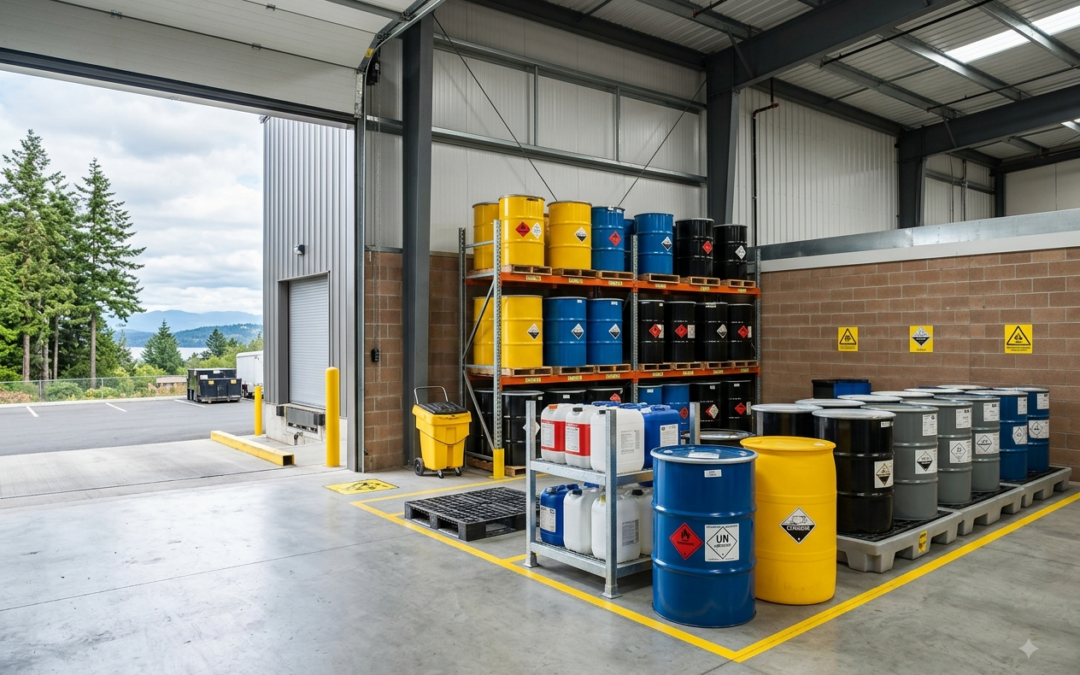
For many businesses in Victoria, hazardous waste management is treated as something to deal with when containers are full, or a disposal pickup is needed. But there is another important question commercial operators should be asking: Is your hazardous waste management process audit-ready?
Being audit-ready does not simply mean having hazardous materials stored somewhere on-site. Businesses need to be able to demonstrate that waste is identified, separated, stored, documented, and handled through appropriate channels. A disorganized waste area, unclear labeling, missing records, or accumulated materials can create unnecessary operational and compliance concerns.
For businesses that generate chemicals, contaminated materials, batteries, oils, solvents, or other potentially hazardous materials, establishing a consistent disposal process can make waste management much easier to control.
What Does “Audit-Ready” Hazardous Waste Management Mean?
An audit-ready system means a business can clearly explain what hazardous waste it generates, where that waste is stored, how it is identified, and what happens when it leaves the property.
The goal is not simply to have fewer containers on-site. It is to create a traceable process from the point where waste is generated to the point where it is collected for appropriate handling.
A well-organized commercial waste program should answer questions such as:
- What hazardous materials are being generated?
- Where are they currently stored?
- Are different waste streams properly separated?
- Are containers suitable and clearly identified?
- How long has accumulated waste been sitting on-site?
- Who is responsible for arranging collection?
- Are disposal and pickup records being maintained?
These questions become particularly important for commercial properties with multiple employees, departments, tenants, or waste-generating operations.
Why Victoria Businesses Should Review Their Waste Process
Hazardous waste can accumulate gradually. A workshop may collect used oils, a maintenance department may store chemical containers, or a commercial facility may retain batteries and contaminated materials until there is enough to arrange a pickup.
The problem is that small amounts can become a larger storage issue over time.
Regularly reviewing hazardous waste management allows businesses to identify unnecessary accumulation before it affects available storage space or creates additional handling concerns. It can also help management understand exactly what types of waste are being generated and whether existing procedures are still appropriate.
This is especially useful for businesses that have changed operations, renovated a facility, introduced new equipment, or started using different chemicals or materials.
Common Signs Your Hazardous Waste Process Needs Attention
A business may benefit from reviewing its system if:
Waste Containers Are Difficult to Identify
If employees cannot immediately determine what a container contains, the waste management process may need improvement. Clear identification helps reduce confusion during storage and collection.
Different Waste Streams Are Being Mixed
Hazardous materials should not automatically be treated as one general waste category. Different materials can have different handling requirements, making proper segregation an important part of an organized system.
Waste Has Been Sitting for Too Long
Accumulated containers can take up valuable commercial space and make it harder for employees to maintain an organized storage area. A scheduled collection process can help prevent unnecessary buildup.
Disposal Records Are Incomplete
Businesses should know what materials have been removed, when they were collected, and which waste stream they belonged to. Maintaining organized documentation makes the overall process easier to review.
Employees Are Unsure What to Do With New Waste
If staff members regularly ask where a particular chemical, battery, contaminated material, or container should go, the business may need clearer internal procedures.
What Should Businesses Review Before Scheduling Disposal?
Before arranging a commercial collection, Victoria businesses can conduct a basic internal review.
Start by identifying all areas where potentially hazardous materials are generated or stored. This may include workshops, maintenance rooms, storage areas, laboratories, manufacturing spaces, garages, or utility areas.
Next, group materials according to their waste type rather than treating everything as general commercial garbage.
Businesses should also check containers for damage, leaks, unclear identification, or unsuitable storage conditions. Any issue involving potentially hazardous materials should be addressed carefully rather than handled as ordinary garbage.
Finally, determine whether accumulated materials are still required for business operations. Unused or outdated materials can continue occupying storage space long after they have stopped providing value.
How Commercial Waste Planning Can Reduce Disruption
Hazardous waste management should fit into a business’s normal operating schedule rather than becoming an emergency task.
A planned approach can help commercial operators:
- Identify waste before it accumulates.
- Keep storage areas more organized.
- Reduce unnecessary onsite buildup.
- Establish consistent collection procedures.
- Improve internal accountability.
- Maintain clearer disposal documentation.
- Reduce the chance of hazardous materials being placed with regular garbage.
This approach can also make future waste pickups easier because employees already understand how materials should be separated and prepared.
Commercial Waste Disposal Victoria: Build a Process, Not a Last-Minute Solution
Effective Commercial Waste Victoria planning starts before waste becomes a storage problem.
Businesses should understand their waste streams and establish procedures for materials that require specialized handling. Instead of waiting until a storage area becomes overcrowded, commercial operators can incorporate waste reviews into routine facility management.
For businesses generating both general and hazardous materials, separating these streams from the beginning can prevent potentially inappropriate materials from entering regular commercial waste.
A structured process also makes it easier for managers to identify changes in waste volume. If a facility suddenly starts generating significantly more hazardous material, that increase can be investigated rather than going unnoticed.
Hazardous Waste Disposal Victoria: Why Documentation Matters
Documentation is an important part of a professional waste management system.
Businesses should maintain relevant records associated with hazardous materials and their removal. Depending on the waste type and circumstances, useful information may include descriptions of materials, collection dates, quantities, and disposal-related documentation.
Good records provide a clearer history of how waste has been managed. They can also help businesses identify recurring waste streams and determine whether operational changes could reduce unnecessary material generation.
The objective is not to create paperwork for its own sake. It is to make the waste management process easier to understand, track, and improve.
Turning an Audit-Ready Approach Into a Routine
Being audit-ready should not be treated as a once-a-year activity. A more effective approach is to make hazardous waste reviews part of normal commercial property management.
Businesses can periodically inspect storage areas, review waste records, check container identification, and confirm that employees understand internal waste procedures.
It is also useful to review the system whenever there is a significant operational change. New equipment, facility renovations, changes in production, staff turnover, or new materials can all affect the types and quantities of waste a business generates.
By treating hazardous waste management as an ongoing process, Victoria businesses can identify problems earlier and avoid allowing temporary storage to become a permanent accumulation issue.
An audit-ready hazardous waste system gives Victoria businesses greater visibility over what they generate, how it is stored, and how it leaves the property. Rather than waiting for waste to accumulate or disposal decisions to become urgent, businesses can use regular reviews, proper separation, organized records, and planned collection to maintain a more controlled process.
If your business needs help managing accumulated commercial or hazardous materials, Canadian Empire Recycling & Disposal can help you plan the next step for responsible waste handling. Contact Canadian Empire Recycling & Disposal to discuss your commercial waste requirements and arrange an appropriate solution for your Victoria business.