Running a business in Langley means dealing with waste—whether it’s old office furniture, renovation debris, or surplus inventory. Knowing what items are accepted in waste removal services helps businesses stay organized, compliant, and efficient. It also prevents delays, extra fees, and environmental issues caused by improper disposal.
This guide explains what items are typically accepted in commercial waste removal, what requires special handling, and how businesses can plan waste removal responsibly.
Why Understanding Accepted Junk Items Matters
Commercial waste removal differs from residential pickup. Businesses generate larger volumes, heavier materials, and regulated waste streams. Understanding what can and cannot be removed helps:
- Avoid rejected loads
- Maintain workplace safety
- Comply with local regulations
- Reduce environmental impact
- Keep operations running smoothly
Professional waste removal services are designed to handle bulk waste efficiently, but certain materials require advance notice or special processing.
Commonly Accepted Items in Commercial Junk Removal
Most commercial junk removal providers accept a wide range of non-hazardous materials from offices, retail spaces, warehouses, and construction sites.
Office Furniture and Fixtures
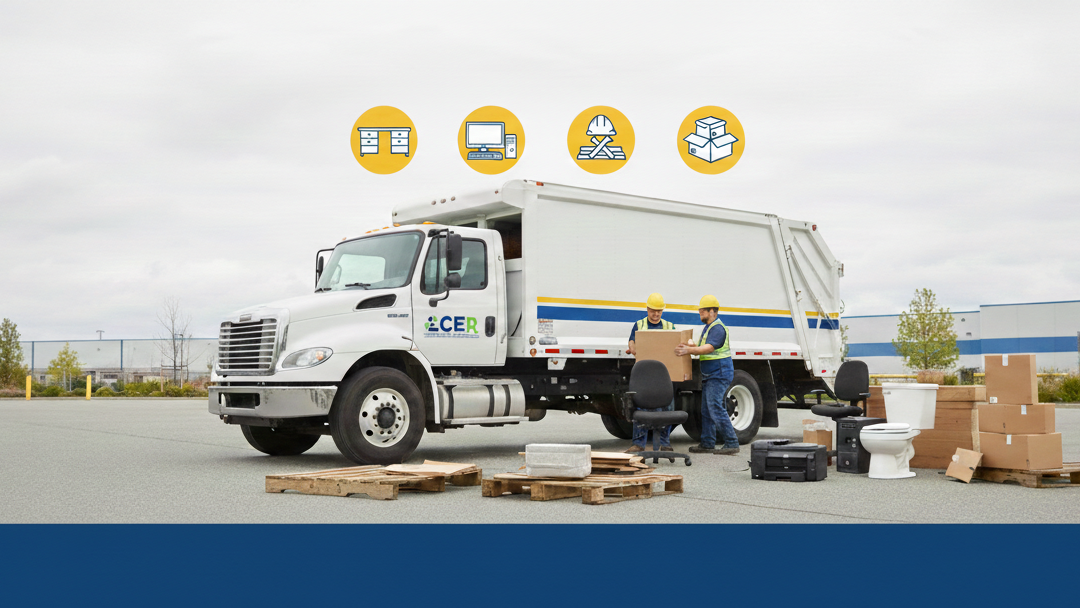
Old or damaged office furniture is one of the most common forms of commercial waste. Accepted items usually include:
- Desks and workstations
- Office chairs
- Filing cabinets
- Shelving units
- Conference tables
These items are often recycled or donated when possible, reducing landfill waste.
Electronics and E-Waste (With Conditions)
Many commercial junk removal services accept electronics, provided they are handled according to recycling regulations. Commonly accepted e-waste includes:
- Computers and monitors
- Printers and copiers
- Telephones and networking equipment
- Servers and IT hardware
Sensitive data should be wiped before pickup. Some electronics may require separate handling due to recycling standards.
Construction and Renovation Debris
Commercial projects often produce large volumes of debris. Accepted materials typically include:
- Drywall and gypsum board
- Wood and lumber
- Metal scraps
- Flooring materials
- Doors and windows
For contractors and property managers, Junk Removal Services Langley providers help streamline post-renovation cleanup and maintain safe job sites.
Retail and Warehouse Junk
Retailers and warehouses frequently require junk removal for excess or outdated inventory. Accepted items often include:
- Pallets and crates
- Cardboard and packaging materials
- Shelving and racking systems
- Damaged merchandise
- Display units
These materials are often sorted for recycling or reuse where possible.
Appliances and Equipment
Many commercial junk removal companies accept large appliances and equipment, such as:
- Refrigerators and freezers
- Stoves and ovens
- Dishwashers
- Vending machines
- Commercial kitchen equipment
Some appliances may require refrigerant removal or special disposal procedures.
General Business Waste and Bulk Items
Businesses may also dispose of general junk, including:
- Broken fixtures
- Old signage
- Carpeting and rugs
- Mattresses from hospitality businesses
- Storage clutter
This type of waste is often handled through Commercial Waste Disposal Langley services to ensure efficient and compliant removal.
Items That May Require Special Handling
Not all junk can be removed without prior planning. Certain materials require special approval or cannot be accepted at all.
Hazardous and Restricted Items
Most commercial junk removal providers do not accept:
- Asbestos-containing materials
- Paints, solvents, and chemicals
- Medical or biohazard waste
- Fuel, oil, or propane tanks
- Batteries in large quantities
These materials require licensed hazardous waste disposal services.
Recycling and Environmental Responsibility
Responsible junk removal goes beyond simply hauling items away. Many providers sort materials to maximize recycling and minimize landfill impact.
Midway through commercial cleanouts, companies like Canadian Empire Recycling help businesses manage waste streams responsibly by prioritizing recycling, reuse, and proper disposal methods.
This approach supports sustainability goals and ensures compliance with environmental regulations.
How to Prepare for Commercial Junk Removal
To ensure a smooth pickup, businesses should:
- Identify the types of materials for removal
- Separate restricted or hazardous items
- Estimate volume and weight
- Schedule removal during low-impact hours
- Confirm access points and loading areas
Clear communication with your junk removal provider prevents delays and additional costs.
Benefits of Professional Commercial Junk Removal
Hiring a professional service offers several advantages:
- Faster and safer removal
- Proper disposal and recycling
- Reduced liability risks
- Improved workplace organization
- Compliance with local regulations
Professional services are especially valuable for large-scale cleanouts and time-sensitive projects.
Choose the Right Commercial Junk Removal Partner
Understanding what items are accepted in commercial junk removal helps businesses plan smarter and avoid costly mistakes. From office furniture and electronics to renovation debris and appliances, most non-hazardous materials can be handled efficiently with the right provider.
For reliable, compliant, and environmentally responsible junk removal solutions, contact Canadian Empire Recycling, which offers trusted commercial services. Their experienced team ensures proper sorting, recycling, and disposal—making commercial cleanouts stress-free and efficient.