
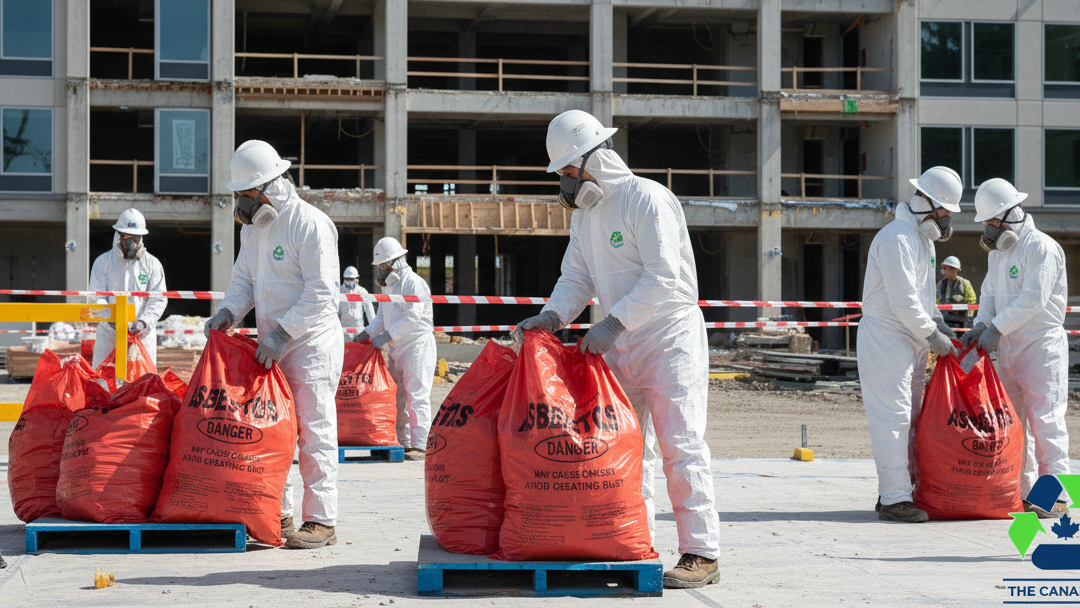
Asbestos was once widely used in commercial construction because of its fire resistance, durability, and insulation properties. However, once its serious health risks became known, strict regulations were introduced across British Columbia. Today, businesses in Delta must follow clear legal and environmental guidelines when handling asbestos-containing materials (ACMs).
If you’re a property owner, contractor, or facility manager, understanding what qualifies as commercial waste is essential to avoid heavy fines, protect workers, and maintain compliance with provincial regulations.
Understanding Asbestos in Commercial Settings
Asbestos is a naturally occurring mineral made up of microscopic fibers. When disturbed, these fibers become airborne and can be inhaled. Long-term exposure may lead to serious health conditions such as asbestosis, lung cancer, and mesothelioma.
In commercial properties, asbestos is most commonly found in:
- Insulation around pipes and boilers
- Vinyl floor tiles and adhesives
- Ceiling tiles and textured coatings
- Roofing materials and shingles
- Cement sheets and siding
- Fireproofing materials
- Drywall joint compounds
Buildings constructed before the early 1990s are more likely to contain asbestos. During renovations, demolitions, or repairs, these materials can become hazardous waste if disturbed.
What Makes Asbestos Waste “Commercial”?
Commercial waste refers to any asbestos-containing material removed from:
- Office buildings
- Warehouses
- Retail stores
- Industrial facilities
- Schools and institutions
- Multi-unit residential complexes
- Construction and demolition sites
The key distinction between residential and commercial waste lies in the scale, regulatory requirements, and handling procedures. Commercial projects often involve larger quantities of material and stricter oversight from WorkSafeBC and environmental authorities.
If asbestos-containing materials are removed, damaged, or scheduled for disposal from a business property, they are classified as commercial waste and must be handled accordingly.
Types of Asbestos Waste
In Delta, asbestos waste is typically categorized into two types:
1. Friable Asbestos Waste
Friable asbestos can be easily crumbled or reduced to powder by hand pressure when dry. This type is highly dangerous because fibers can become airborne quickly.
Examples include:
- Spray-applied insulation
- Pipe insulation
- Boiler lagging
- Acoustic ceiling textures
Friable materials require specialized containment, removal, and disposal procedures.
2. Non-Friable Asbestos Waste
Non-friable asbestos is bonded within a solid material and is less likely to release fibers unless cut, broken, or disturbed.
Examples include:
- Vinyl asbestos tiles
- Cement sheets
- Roofing panels
- Siding materials
Even though non-friable materials are considered lower risk, they still qualify as hazardous when removed and must follow proper disposal protocols.
When Does It Become Regulated Waste?
Asbestos materials officially become regulated commercial waste when:
- They are removed during renovation or demolition
- They are damaged and releasing fibers
- They are scheduled for disposal
- They exceed regulatory concentration thresholds (typically more than 0.5% content in BC)
At this stage, the materials must be double-bagged in approved containers, labeled clearly, transported by licensed carriers, and disposed of at authorized facilities.
Improper handling can lead to serious penalties, environmental contamination, and liability issues for businesses.
Legal Requirements for Businesses
Commercial property owners and contractors must comply with:
- WorkSafeBC asbestos regulations
- BC Hazardous Waste Regulation
- Environmental Management Act guidelines
- Municipal disposal requirements
Before any renovation or demolition project, an asbestos survey is typically required. If asbestos is identified, a qualified abatement contractor must remove it under controlled conditions.
Transporting asbestos waste also requires proper documentation and disposal at approved hazardous waste facilities. Businesses cannot simply discard asbestos materials in general construction bins or landfills.
For regulated disposal, many contractors rely on specialized services offering Asbestos Waste Disposal solutions to ensure compliance and safe handling.
Can Businesses Use Regular Disposal Facilities?
No. Asbestos waste cannot be treated like standard construction debris. It does not qualify for routine Commercial Waste Disposal Delta unless the provider is licensed and authorized to manage hazardous materials.
In some cases, designated Hazardous Waste Drop Off Delta facilities may accept properly packaged asbestos materials, but strict procedures must be followed. Improper packaging or documentation can result in rejection and possible fines.
This is why professional handling is strongly recommended for commercial projects.
Health and Environmental Risks
Improper asbestos disposal can lead to:
- Airborne fiber contamination
- Worker exposure
- Environmental pollution
- Costly cleanup orders
- Legal penalties and lawsuits
Because asbestos fibers are microscopic and long-lasting in the environment, even small amounts can pose long-term risks.
Businesses have both a legal and ethical responsibility to ensure waste is managed safely.
Common Scenarios That Create Commercial Asbestos Waste
Here are examples where waste is commonly generated:
- Office renovations removing old ceiling tiles
- Warehouse demolition projects
- Retail store remodeling
- Replacing commercial roofing systems
- Upgrading HVAC systems with old insulation
- Industrial site decommissioning
In each case, once asbestos-containing material is disturbed and removed, it becomes classified as commercial hazardous waste.
Why Professional Disposal Matters
Handling asbestos requires:
- Trained and certified personnel
- Negative air containment systems
- Protective equipment
- Specialized packaging
- Licensed transportation
- Approved disposal facilities
Attempting to cut costs by avoiding proper disposal can result in far greater financial consequences in the long run.
Working with experienced providers ensures that your Asbestos Waste Disposal Delta process meets regulatory standards while protecting workers and the surrounding community.
Any asbestos-containing material removed, disturbed, or disposed of from a commercial, industrial, institutional, or large residential property falls under this category. Whether friable or non-friable, once it is part of a renovation or demolition project, it must be handled according to strict hazardous waste regulations.
If your business is planning renovations, demolition, or upgrades, professional support is essential. Contact Canadian Empire Recycling offers reliable and compliant solutions for Commercial Waste, including safe handling and guidance on approved Hazardous Waste Drop Off procedures. Their experienced team ensures proper containment, transportation, and disposal so your project stays safe, legal, and environmentally responsible.