If you’re upgrading your home with new hardwood, laminate, or tile, one of the first steps is pulling up your old carpet. While ripping out carpet might seem like a simple job, what comes after is where many homeowners get stuck: how do you get rid of that heavy, dusty, and sometimes smelly carpet safely? Since carpets don’t just vanish with your new flooring installation, proper disposal is essential for safety, health, and environmental responsibility.
Why Carpet Disposal Needs Care
Carpets might look harmless, but they can carry a lot of hidden mess. Over years of use, they trap allergens, dust mites, bacteria, mold spores, and even chemicals from cleaning products. When you cut, pull, and roll them up, these particles can release into the air, potentially causing respiratory irritation or allergic reactions.
Additionally, many carpets are made with synthetic fibers like nylon and polyester, backed by adhesives and padding that may contain chemicals. Tossing them out without proper disposal contributes to landfill waste and environmental pollution.
Step 1: Prepare for Safe Removal
Before you even grab your utility knife, take safety measures.
- Wear protection: Gloves, safety glasses, and a dust mask will help protect you from fibers, dust, and sharp tack strips.
- Clear the area: Remove furniture and breakables so you can work without tripping hazards.
- Ventilate: Keep windows open to reduce dust buildup inside your home.
By taking these precautions, you’ll make the removal process cleaner and healthier.
Step 2: Cutting and Rolling the Carpet
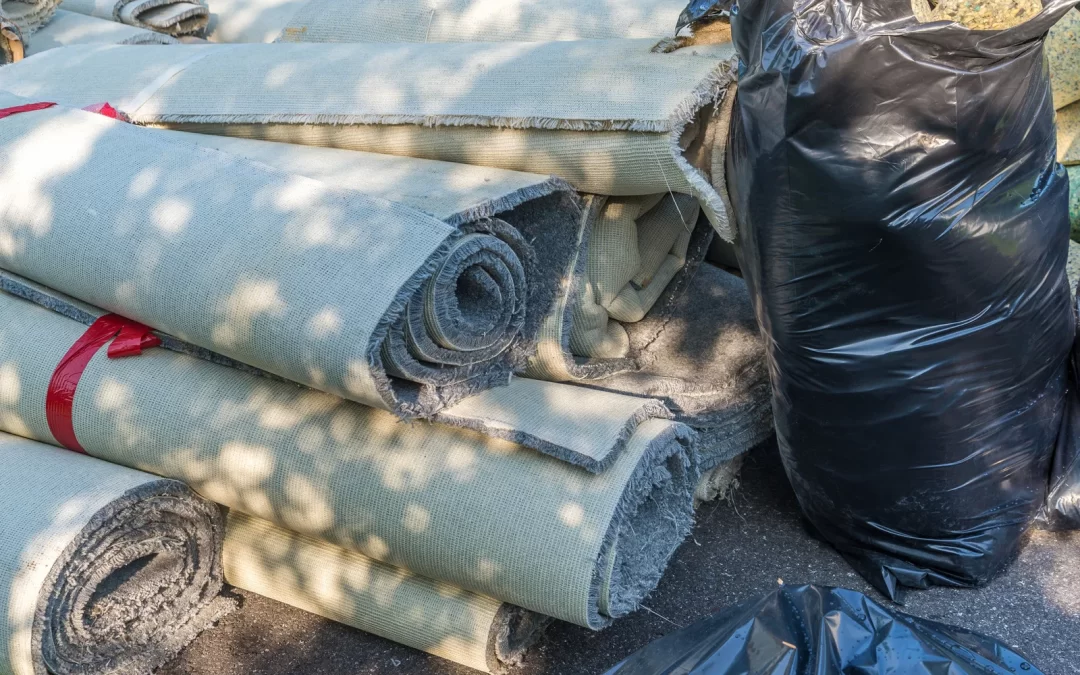
Carpet is heavy, especially in larger rooms. The best way to make it manageable is to cut it into strips.
- Use a sharp utility knife to slice the carpet into 3–4 foot wide strips.
- Roll each strip tightly and secure it with duct tape or twine.
- Don’t forget about the underpadding – cut and roll it the same way.
This step ensures your old flooring is compact enough for easier transport and disposal.
Step 3: Tack Strips and Staples
Under the carpet, you’ll find tack strips around the edges and staples securing the padding. These can be sharp and dangerous. Use a pry bar or hammer to remove them carefully, and place them in a sturdy container or bucket so they don’t pierce through garbage bags.
Step 4: Decide on Disposal or Recycling
Here’s where many homeowners make mistakes: not every carpet should go straight into the landfill. You have a few eco-friendlier options:
- Check recycling programs: Some recycling centers accept old carpets and pads, particularly if they are clean and dry. The fibers can sometimes be repurposed into insulation or new flooring products.
- Carpet reuse: If the carpet is in relatively good condition, consider donating it to charities, shelters, or reuse centers. Sometimes, small businesses or community groups will take sections for secondary use.
- Curbside bulk pickup: If recycling isn’t an option, contact your local waste management provider to arrange for bulk pickup. Most cities require you to cut and bundle the carpet before collection.
For homeowners who want quick and reliable help, junk removal services Coquitlam can be a convenient option, especially if you’re tackling larger renovation projects and don’t want to deal with hauling heavy carpet yourself.
Step 5: Professional Hauling Services
If dealing with heavy carpet rolls isn’t your idea of a DIY weekend, professional junk removal services can help. They’ll do the lifting, hauling, and responsible disposal for you. This option is particularly helpful if you’re replacing flooring in multiple rooms or handling water-damaged carpets that might contain mold. Companies like Canadian Empire Recycling specialize in eco-friendly disposal and recycling methods, ensuring that your old flooring is handled properly without harming the environment.
Step 6: Consider Hazardous Situations
Not all carpets are safe to handle yourself. If your old carpet has been exposed to:
- Asbestos adhesives (common in homes built before the 1980s)
- Mold growth after flooding
- Pest infestations
Step 7: Final Cleanup
After your carpet is gone, vacuum the subfloor thoroughly to remove dust, debris, and any loose fibers. If you’re installing new flooring right away, a clean surface will ensure a smoother installation.
A Safer, Cleaner Way to Upgrade
Replacing flooring is exciting, but the disposal part is just as important as installation. An old carpet can’t simply be tossed out like regular household trash. By cutting it down, rolling it properly, and disposing of it through recycling, donation, or waste management, you’ll protect your health and the environment. For any situation where your old flooring may involve hazardous materials like asbestos, it’s always best to call experts for safe removal and asbestos disposal Coquitlam.
And if the job feels overwhelming, you don’t have to do it alone. Contact Canadian Empire Recycling is available to help with carpet removal and eco-friendly disposal solutions, making your flooring upgrade stress-free and sustainable.